
CLEMATIS
<
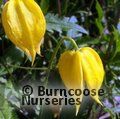

>
CLEMATIS
Commonly known as Alpine clematis, Virgin's bower
Showy, sometimes possibly too showy, long-flowering climbers with variety of shape and colour for all the year.
Genus of more than 200 species of deciduous, twining leaf-climbers, scandent shrubs, subshrubs and sometimes woody-based herbaceous perennials from Europe, the Himalayas, China, Australasia, North America and Central America.
More than 400 cultivars are in cultivation. Native perennial Traveller's joy or Old man's beard (C. vitalba) is a plant of hedgerows and wood edges. The climbing stems can reach to 30m.
Full Plant Details - Sun/Soil & other attributes
-
 Good to know
C. alpina varieties tolerate cold, exposed sites. Prune after flowering to allotted space to encourage growth for next season's flowers.
Good to know
C. alpina varieties tolerate cold, exposed sites. Prune after flowering to allotted space to encourage growth for next season's flowers. -
 Pests & Diseases
cutworms, aphids on young plants, clematis wilt.
Pests & Diseases
cutworms, aphids on young plants, clematis wilt. -
 Place of origin
Europe.
Place of origin
Europe. -
DeciduousEarly flowering species. Bears flowers on previous year's shoots and, sometimes, on new growth in summer.
-
Frost hardy (down to -5)
-
 Height
2-3m (6-10ft)
Height
2-3m (6-10ft) -
Spread
1.5m (5ft)
-
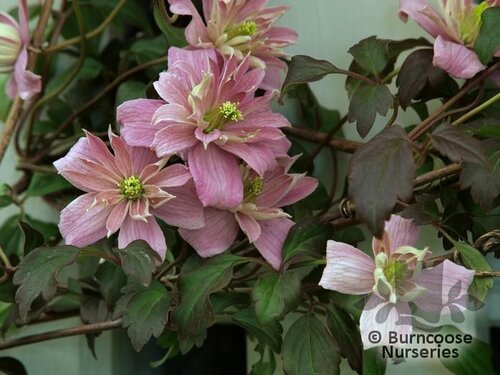
ClimberSome of these climbing plants will need trellis or wire supports if grown on walls or fences. Other grow aerial roots and are self-clingingOpen, bell-shaped flowers 7-10cm (3-4in) across with white centres and cream anthers followed by fluffy seed heads.
-
 Hardy - average winter
Hardy through most of the UK apart from inland valleys, at altitude and central/northerly locations. May suffer foliage damage and stem dieback in harsh winters in cold gardens. Plant can withstand temperatures down to -10°C (14°F)
Hardy - average winter
Hardy through most of the UK apart from inland valleys, at altitude and central/northerly locations. May suffer foliage damage and stem dieback in harsh winters in cold gardens. Plant can withstand temperatures down to -10°C (14°F) -
Fertile well drained soilHumus-rich. Mulch in late winter.
-
 Full sun
Provide shade for roots and base of plant.
Full sun
Provide shade for roots and base of plant. -
 Partial shade
-
 skin irritant
Rabbits. C. harmful if eaten
skin irritant
Rabbits. C. harmful if eaten
View Planting Tips and Care Advice
Clematis - Growing Guide
Planting to avoid allergic reactions and asthma
View Customers Also Bought


View Planting Combinations

