
IRIS
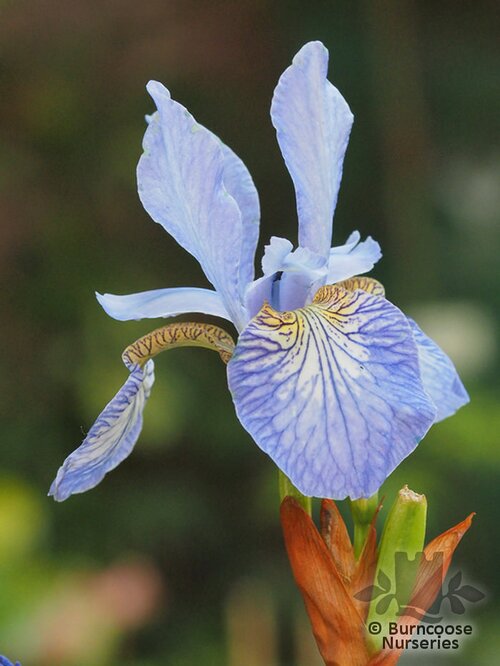
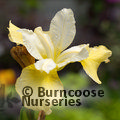


IRIS
Commonly known as Japanese water iris
Named from the Greek for rainbow. It symbolises life and resurrection. It is also thought that the French fleur-de-lys is a representation of this flower.
Genus of about 300 species of upright rhizomatous or bulbous perennials from a wide range of habitats in the northern hemisphere.
Rhizomatous irises have stout rootstocks on or very close to the surface. Bearded irises have rootstocks on the surface, beardless have them just under the surface. The bulbous irises, which also have fleshy roots, fall into 3 groups, Reticulata, Juno and Xiphium.
Water irises (Laevigata) thrive in damp places and include the UK native I. pseudacorus, the yellow flag.
Our other native, I. foetidissima, stinking iris (curious rather than stinking) or gladdon, with its bright orange seeds, is a dull blue or buff-yellow flower of hedgebanks, damp woods and sea cliffs.
Full Plant Details - Sun/Soil & other attributes
-
 Good to know
Japanese water iris.
Good to know
Japanese water iris. -
 Place of origin
Garden origin(USA)
Place of origin
Garden origin(USA) -
DeciduousLeaves 20-60cm (8-24in) long.
-
 Height
90cm (36in)
Height
90cm (36in) -
HerbaceousUpright rhizomatous perennial. 3 or 4 flowers to a stem.
-
Wet or boggy soilThrives on pond and stream margins. Will grow in a moist border.
-
 Full sun
-
Mature Size90cm (36in)

View Planting Tips and Care Advice
- Dividing Herbaceous Perennials - Video Tip ondemand_video
- Spring Planting Osteospermums - Video Tip ondemand_video
- Dividing Summer Perennials - Video Tip ondemand_video
- Dividing summer flowering Hemerocallis - Video Tip ondemand_video
- Summer propagation - Video Tip ondemand_video
- Self-seeding aquilegia - Video Tip ondemand_video
- Supporting Plants - Video Tip ondemand_video
- Dead heading meconopsis - Video Tip ondemand_video
- Dead heading Delphiniums - Video Tip ondemand_video
- Feeding herbaceous peonies - Video Tip ondemand_video
- Overpotting Problems - Video Tip ondemand_video
View Customers Also Bought


View Planting Combinations
