
LEPTOSPERMUM
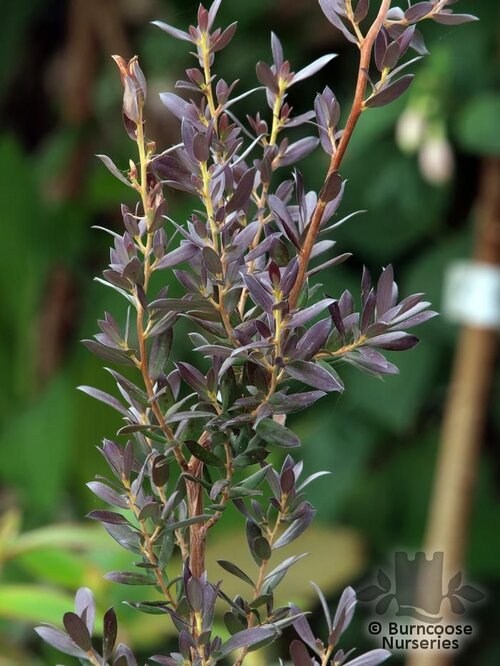
<
>
LEPTOSPERMUM
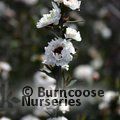
Commonly known as Australian tea tree, Manuka
All flower APR-JUL. They can be grown successfully outdoors in most of the country providing they are planted in a hot, dry and very well sheltered location. If these conditions are not available, then they should be grown in pots or containers in an ericaceous compost and brought into the greenhouse for the winter
Small, bright flowers making up for their size by their profuse flowering.
Early Australian settlers steeped leaves of some varieties for drinking. L. scoparium is the source of Manuka honey.
Genus of about 85 species of evergreen shrubs and trees occurring in rainforest and semi-arid areas mainly in Australia but also from southeastern asia to New Zealand.
Full Plant Details - Sun/Soil & other attributes
-
Floweringlocal_floristJanlocal_floristFeblocal_floristMarlocal_floristAprlocal_floristMaylocal_floristJunlocal_floristJullocal_floristAuglocal_floristSeplocal_floristOctlocal_floristNovlocal_floristDec
-
 Pests & Diseases
None
Pests & Diseases
None -
 Place of origin
Garden origin
Place of origin
Garden origin -
Resistant to honey fungusThese plants have little or few problems with honey fungus.
-
Evergreen
-
Frost hardy (down to -5)
-
 Height
1-2m (3-6ft)
Height
1-2m (3-6ft) -
Spread
1-2m (3-6ft)
-
Medium shrubTypically grow to around 4-6 feet in height
-
 Hardy - average winter
Hardy through most of the UK apart from inland valleys, at altitude and central/northerly locations. May suffer foliage damage and stem dieback in harsh winters in cold gardens. Plant can withstand temperatures down to -10°C (14°F)
Hardy - average winter
Hardy through most of the UK apart from inland valleys, at altitude and central/northerly locations. May suffer foliage damage and stem dieback in harsh winters in cold gardens. Plant can withstand temperatures down to -10°C (14°F) -
Fertile well drained soil
-
 Full sun
-
 Partial shade
-
 Bee friendly
-
Mature Size1-2m (3-6ft)


1-2m (3-6ft)
View Planting Tips and Care Advice
Leptospermum - Growing Guide


