
QUERCUS

QUERCUS
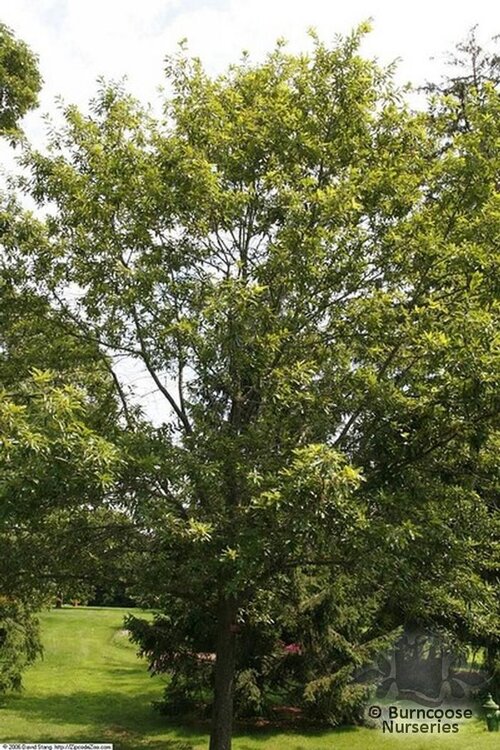
Commonly known as Gambel oak, Shin oak
Genus of about 530 species of deciduous, semi-evergreen or evergreen trees and shrubs in the beech family widely distributed in woodland and scrub in the northern hemisphere extending to tropical latitudes.
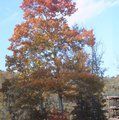
Some deciduous species give excellent autumn colour.
Because of land use changes and climate change many species are under acute threat. In the highlands of Mexico, Central America and the northern Andes forests have been cleared to make coffee plantations and cattle ranching. Pine forests are invading oak in the Indian Himalayas because of temperature rise.
In the UK, Phytopthora ramorum (so-called sudden oak death), a bacterium thought to cause acute oak decline and the oak processionary moth, which causes defoliation, are modern threats.
Represented in the UK by 2 natives, Sessile or Durmast (Q. petraea), stalked leaves and unstalked acorns and English or Pedunculate (Q. robur) with very short stalks on leaves and long stalks on acorns.
Two other oaks commonly seen are the holm oak (Q. ilex), evergreen, and the Turkey oak (Q. cerris) which was introduced, mistakenly, as a source of good timber.
Full Plant Details - Sun/Soil & other attributes
-
 Pests & Diseases
Aphids, gall wasps, oak wilt, honey fungus, powdery mildew, bracket fungi.
Pests & Diseases
Aphids, gall wasps, oak wilt, honey fungus, powdery mildew, bracket fungi. -
 Place of origin
Central southwestern USA, northwestern Mexico.
Place of origin
Central southwestern USA, northwestern Mexico. -
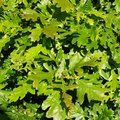
DeciduousGlossy, dark-green, elliptical or oblong leaves,7-12cm (3-5in) long, deeply lobed, rounded at the tip. They turn yellow and reddish in autumn.
-
Fully hardy
-
 Height
3-9m (10-30ft) (very variable)
Height
3-9m (10-30ft) (very variable) -
Spread
3-9m (10-30ft)
-
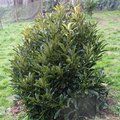
TreeShrubby, small tree. Grey, rough, deeply-furrowed bark. Produces acorns 1-2cm (threequarters inch) long.
-
 Hardy - cold winter
Hardy in most places throughout the UK even in severe winters. May not withstand open/exposed sites or central/northern locations. Plant can withstand temperatures down to -15°C (5°F)
Hardy - cold winter
Hardy in most places throughout the UK even in severe winters. May not withstand open/exposed sites or central/northern locations. Plant can withstand temperatures down to -15°C (5°F) -
Fertile moist well-drained soil
-
 Full sun
-
 harmful if eaten
(Can be harmful to pets if eaten)
harmful if eaten
(Can be harmful to pets if eaten) -
 Rounded to broadly spreading
-
Mature Size3-9m (10-30ft) (very variable)


3-9m (10-30ft)
View Planting Tips and Care Advice
- When is the right time to collect seeds?
- When are seeds actually ripe and ready for collection?
- Magnolia seed collection - Video Tip ondemand_video
- Cornus capitata seed collection - Video Tip ondemand_video
- Lithocarpus Seed Collection - Video Tip ondemand_video
- Rhododendron seed collecting - Video Tip ondemand_video
- Camellia seed collection - Video Tip ondemand_video
- How to plant a tree - Video Tip ondemand_video
- How to plant a tree
- Ties - Video Tip ondemand_video
- Restaking fallen young trees - Video Tip ondemand_video
- Fallen old tree - Video Tip ondemand_video
- Clearing up fallen beech tree - Video Tip ondemand_video
- Spring pruning - Video Tip ondemand_video
- Removing side shoots - Video Tip ondemand_video
- Pruning and Shaping Magnolia - Video Tip ondemand_video
- Deer protection - Video Tip ondemand_video
- Weed Spraying - Video Tip ondemand_video
- Removing Ivy - Video Tip ondemand_video
- Removing wire protection - Video Tip ondemand_video
- Tidying young trees in October - Video Tip ondemand_video
- Tree Survey - Video Tip ondemand_video
- Crown uplift - Video Tip ondemand_video
- Removing shoots below graft - Video Tip ondemand_video
- Removing peeling bark - Video Tip ondemand_video
- Maintaining variegation - Video Tip ondemand_video
View Customers Also Bought


View Planting Combinations
