
PASSIFLORA x exoniensis
PASSIFLORA x exoniensis
Commonly known as Exeter passion flower

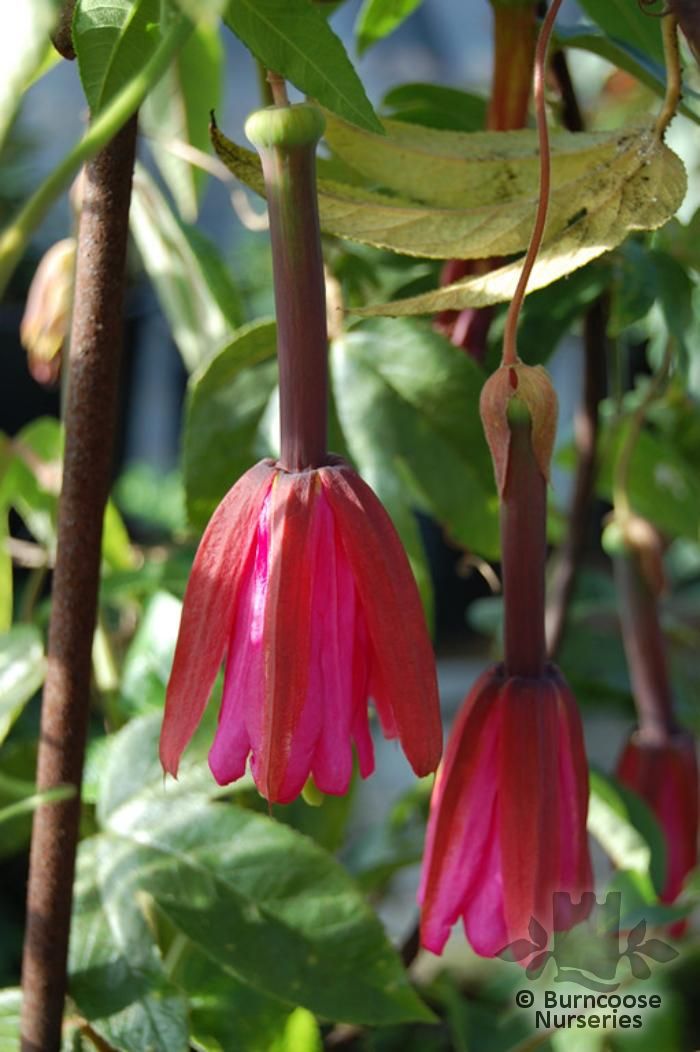
Pendent reddish-pink flowers. Fruits toxic except when fully ripe.


£25.00
Full Plant Details - Sun/Soil & other attributes
-
Floweringlocal_floristJanlocal_floristFeblocal_floristMarlocal_floristAprlocal_floristMaylocal_floristJunlocal_floristJullocal_floristAuglocal_floristSeplocal_floristOctlocal_floristNovlocal_floristDec
-
 Good to know
Syn Passiflora 'Exoniensis'
Good to know
Syn Passiflora 'Exoniensis' -
 Pests & Diseases
Aphids, scale insects, red spider mite, possibly honey fungus
Pests & Diseases
Aphids, scale insects, red spider mite, possibly honey fungus -
 Place of origin
Veitch Nursery at Exeter approx 1870
Place of origin
Veitch Nursery at Exeter approx 1870 -
Evergreen
-
 Shades of pink
All shades of pink through to Carmine (red)Rose pink
Shades of pink
All shades of pink through to Carmine (red)Rose pink -
SingleRow of petals round conspicuous stamens - no more than 8 petals
-
Greenhouse / conservatoryNot the sort of plants to be grown outside where there are likely to be frosts. These plants need to be grown in a conservatory or cool greenhouse or at least brought inside for the winter
-
Patio / pot plants
-
Sub-tropical / mediterranean
-
 Trifoliate
-
 Height
4- 8 metres
Height
4- 8 metres -
Spread
1 metre
-
ClimberSome of these climbing plants will need trellis or wire supports if grown on walls or fences. Other grow aerial roots and are self-clinging
-
 Tender - cool or frost free greenhouse
Tolerant of low temperatures, but not surviving being frozen. Except in frost-free inner-city areas or coastal extremities requires glasshouse conditions. Plant can withstand temperatures down to 1°C (34°F)
Tender - cool or frost free greenhouse
Tolerant of low temperatures, but not surviving being frozen. Except in frost-free inner-city areas or coastal extremities requires glasshouse conditions. Plant can withstand temperatures down to 1°C (34°F) -
Fertile moist well-drained soil
-
Tolerates all
-
 Full sun
-
 Partial shade
-
 harmful if eaten
View Detailed Plant Description