WINNERS AND LOSERS IN THE DROUGHT
After nearly 70 days without rain here at Burncoose and two months of watching plants slowly die in the gardens (no matter how much watering has been attempted). It is time to try to cheer ourselves up with a review of the Winners and Losers in the drought. Also a few thoughts on how to help revive what look like hopeless lost causes now that some rain has at last arrived in Cornwall. Although I only scratch the surface here of a huge subject the results are interesting.
Some of the plants that have held up best in the drought are, as expected, those which originate from hotter countries. However other drought winners (here at least) are not necessarily those which you might expect. Some of the 2026 winners fared far less well in the last great drought of 1976.
The Winners
1. Magnolias
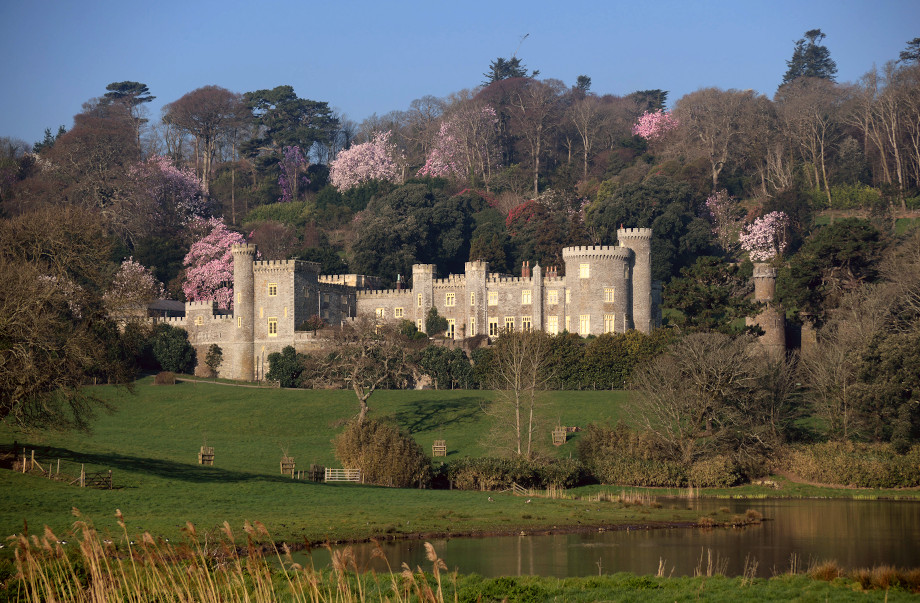
As surface rooting trees one might have expected casualties in hotter, drier locations. This has not been the case here. Only a few younger trees have minor premature leaf drop and the vast majority have ridden out the drought with good new growth and plenty of new buds for next spring. The magnolia trees have protected themselves by shedding all their developing seed pods to save wasted energy.


2. Camellias
These are plants with deep tap roots which have been able to get right down into the water table. Nevertheless, one would have expected yellowing of the leaves and some leaf scorching of plants growing in full sun. This has not been the case with only a few exceptions. Camellias with pure white flowers often have yellowing leaves in full sun but flower perfectly well next spring.


3. Evergreen oak species from China, Japan, Korea, Taiwan, Mexico & the USA
All the Fagaceae have relished the searing heat and dry conditions. Exceptional new growth and not at all what one might have expected. Here are a few examples.

Quercus laurifolia (USA)


Quercus franchetii (China)

Lithocarpus edulis (Japan)
4. Walnuts & Hornbeams
These are already trees for the future as our climate warms. Without exception all the many species of Juglans and Carpinus have thrived in the heat and several have produced fruit for the first time as young trees.

Carpinus polyneura fruiting for the first time

Carpinus polyneura fruiting for the first time

Juglans ailantifolia
5. Acacias, Escallonia and Vitex
One might have expected plants from these genus have done well even in the poorest soils but the growth rates have nevertheless been phenomenal. The Vitex is in flower today about a month earlier than usual.

Acacia baileyana

Acacia baileyana with huge quantities of flower bud

Escallonia bifida

Vitex agnus-castus

Vitex agnus-castus
The losers
6. Hydrangeas
All the Hortensia varieties have shrivelled flowers and drooping or dead leaves. A ghastly sight which leaves gardeners depressed and disinclined to replant. However, when the rains come, even the worst supposed casualties will revive. Some may need to be cut right back to ground level and some to about half their height. You will be pleasantly surprised at the results as you can see here.

Wilted and dying Hydrangeas

Wilted and dying Hydrangeas

Hydrangeas cut back hard to reshoot last May
7. Deutzia and Philadelphus
Here these have die back, few leaves and also look ghastly. However just look at a clump which we cut down a month or so ago. The regrowth, even in drought conditions, is exceptional. All is not lost if you get pruning soon! The plants will quickly reshoot and flower well next year.

Drought struck Deutzia and Philadelphus

Drought struck Deutzia and Philadelphus

Regrowth on Deutzia ‘Strawberry Fields’
8. Sycamore & Beech Trees
There is much premature leaf drop on the sycamore trees here and some, growing in full sun, have nearly lost all their leaves. You can see the same all along the motorways of the UK. Natures way of coping with drought is for trees to shed leaves prematurely and very few will actually be dead. Preserving energy should enable them to come into growth perfectly well next spring.
Beech trees are losing their crowns in the drought. We saw this in 1976 more so than today. Although there was die back at the crown the mature trees soon recovered and regrew to their original height in a few years.

Distressed Sycamores

Distressed Sycamores

Beech Trees losing their crowns
9. Cercidiphyllums and Sorbus aria varieties
As in the earlier summer droughts since 2020 all Cercidiphyllums are severely defoliated and several here have died from this drought onslaught. If there is one tree that can be saved by watering this is it. The large leafed Sorbus look defoliated and ghastly but they have survived before from similar drought leaf drop.

Dying Cercidiphyllum

Defoliated Sorbus thomsonii

Defoliated Sorbus thomsonii
10. Rhododendrons
By far and away the most serious casualties here have been the big leaf rhododendrons although we have managed to save some by regular watering. It has been impossible to water all but a small number of rhododendron plants. So many of the plants planted out in the last 5 years look sickly and will probably die next year or are already properly dead. As the rains come some may have dead branches to prune out but, sadly, there is little upside at all here.
However just look at some evergreen azaleas which we cut back to the ground at the start of the drought and cheer yourselves up by what can be done to revive apparently dead azaleas.

Dead big leaf Rhododendrons

Dead big leaf Rhododendrons

Rhododendron pseudochrysanthum

Picture of big leafed Rhododendron saved by watering

Reviving evergreen Azaleas
If it’s any consolation the 2026 drought has not been as long or as damaging here as the one in 1976!