
DAPHNE
<


>
DAPHNE
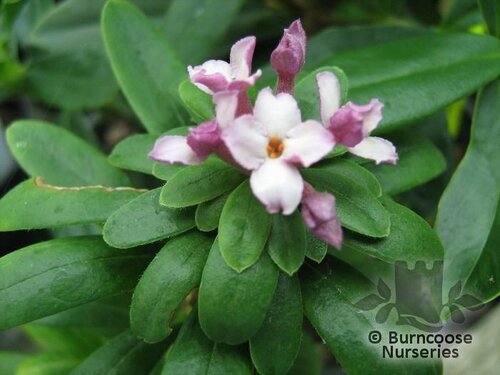
Commonly known as Variegated daphne
Daphnes require good, rich, loamy soil and good drainage is essential for success.
Genus of about 100 species of deciduous, semi-evergreen or evergreen shrubs from Europe, northern Africa and temperate and subtropical Asia.
Their main attraction is the clusters of usually heavily scented flowers. Some have variegated leaves. They can be grown in borders, rock gardens and in a woodland setting.
The "Eternal" series are a result of a successful 30 year breeding programme to produce a free-flowering Daphne more tolerant of a wide range of soil and garden conditions.
All are attractive to bees and other insects, the earlier bloomers being particularly useful.
D. mezereum, Mezereon, is the native. Found in woods on calcareous soils is very rare.
Full Plant Details - Sun/Soil & other attributes
-
 Good to know
All daphnes resent transplanting. x burkwoodii has a habit of shedding leaves in dry summers. This does not affect the performance of the plant and new leaves appear in autumn or spring. Attractive to bees and other insects.
Good to know
All daphnes resent transplanting. x burkwoodii has a habit of shedding leaves in dry summers. This does not affect the performance of the plant and new leaves appear in autumn or spring. Attractive to bees and other insects. -
 Pests & Diseases
Aphids, leaf spot, grey mould, viruses.
Pests & Diseases
Aphids, leaf spot, grey mould, viruses. -
 Place of origin
Garden origin
Place of origin
Garden origin -
Semi-evergreenKeeps some of its foliage all year, and will drop some leaves as well.Linear to lance-shaped leaves to 4cm (1½in) long.
-
BorderSuitable for a shrub border
-
Fully hardyBorderline
-
Gold variegated
-
 Height
1.5m (5ft)
Height
1.5m (5ft) -
Spread
1.5m (5ft)
-
Medium shrubTypically grow to around 4-6 feet in heightUpright, densely-branched shrub. Flowers in terminal clusters of up to 16 flowers 8mm (less than ½in) across.
-
 Hardy - average winter
Hardy through most of the UK apart from inland valleys, at altitude and central/northerly locations. May suffer foliage damage and stem dieback in harsh winters in cold gardens. Plant can withstand temperatures down to -10°C (14°F)Borderline
Hardy - average winter
Hardy through most of the UK apart from inland valleys, at altitude and central/northerly locations. May suffer foliage damage and stem dieback in harsh winters in cold gardens. Plant can withstand temperatures down to -10°C (14°F)Borderline -
Scented flowers
-
Fertile well drained soilHumus rich but not dry - mulch to keep roots cool.
-
Neutral soil preferredOr slightly alkaline to slightly acidic
-
 Full sun
-
 Partial shade
-
 Bee friendly
-
Mature Size1.5m (5ft)


1.5m (5ft)
View Planting Tips and Care Advice
Cold weather damage to evergreen plants
Daphne - Care Guide


