
SAMBUCUS
<
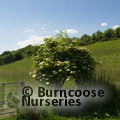
>
SAMBUCUS
Commonly known as Golden elder, Red-berried elder
All flower JUN-JUL
Mainly ornamental but can be planted to support native butterfly and bird species.
Native elder, S. nigra has been used medicinally throughout history and is well-known as various syrups and drinks. A small tree of disturbed ground especially around farmsteads and old cottages where it thrives in nitrogen-rich soil.
A perennial, S. ebulus, Danewort, and probably native can be found scattered throughout the UK on roadsides and waste places.
Genus of about 10 species of herbaceous perennials and deciduous shrubs and trees from woodlands and thickets in temperate and subtropical regions of Eurasia, N and tropical E. Africa, Australia and North and South America.
Full Plant Details - Sun/Soil & other attributes
-
 Good to know
Prune back to ground level in early spring for best colour. Wildlife plant - insects, birds.
Good to know
Prune back to ground level in early spring for best colour. Wildlife plant - insects, birds. -
 Pests & Diseases
Blackfly on young shoots and foliage. Verticillium wilt.
Pests & Diseases
Blackfly on young shoots and foliage. Verticillium wilt. -
 Place of origin
(species) Europe, Russia (western Siberia)
Place of origin
(species) Europe, Russia (western Siberia) -
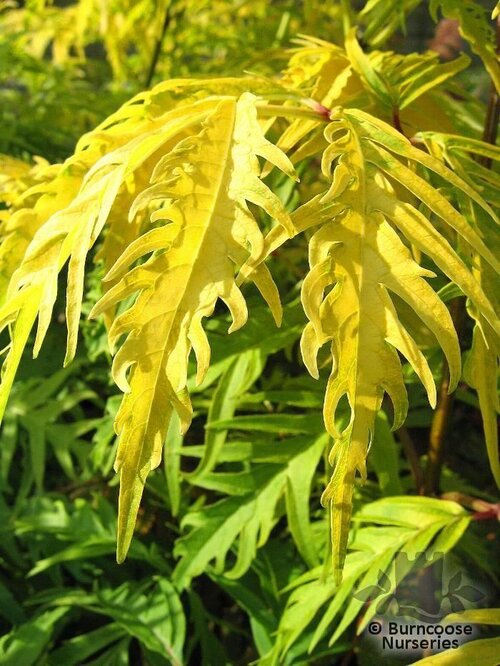
DeciduousPinnate leaves to 22cm (9in), each with 5 oval or ovate, toothed leaflets. Leaves are bronze when young, turning golden yellow
-
 Yellow
Creamy yellow.
Yellow
Creamy yellow. -
Fully hardy
-
 Height
3m (10ft)
Height
3m (10ft) -
Spread
3m (10ft)
-
Tall ShrubBushy shrub with arching shoots. Produces small flowers in conical panicles 8cm (3in) long, followed by spherical, glossy red fruit.
-
 Hardy - very cold winter
Hardy in all of UK and northern Europe. Plant can possibly withstand temperatures down to -20°C (-4°F)
Hardy - very cold winter
Hardy in all of UK and northern Europe. Plant can possibly withstand temperatures down to -20°C (-4°F) -
 Partial shade
Foliage can burn in hot sun
Partial shade
Foliage can burn in hot sun -
 harmful if eaten
(People & Pets)
harmful if eaten
(People & Pets) -
Butterfly friendly
-
Mature Size3m (10ft)
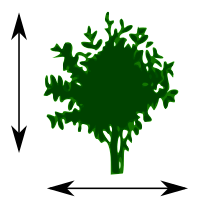

3m (10ft)
View Planting Tips and Care Advice
Sambucus - Growing Guide


