
ECHINACEA
<


>
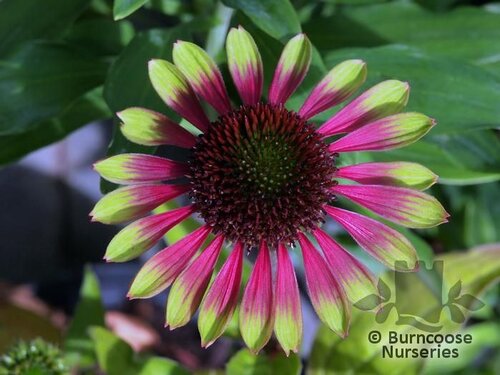
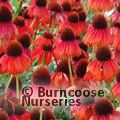
ECHINACEA
Commonly known as Coneflower
Echinacea and its relative Rudbeckia are the coneflowers from North America.
The former is the perennial for borders and open woodland, the latter often grown for naturalising in a meadow or, as cultivar hirta, as an annual for infilling and borders.
Echinacea is a genus of 9 species of bold, stiff perennials from dry prairies, gravelly hillsides and open woodland in central and eastern North America. the name is derived from the Greek for hedgehog.
Full Plant Details - Sun/Soil & other attributes
-
Floweringlocal_floristJanlocal_floristFeblocal_floristMarlocal_floristAprlocal_floristMaylocal_floristJunlocal_floristJullocal_floristAuglocal_floristSeplocal_floristOctlocal_floristNovlocal_floristDec
-
 Good to know
Cut back stems as flowers fade to encourage further production. Cross between E. purpurea and E. papadoxa. Wildlife plant - insects, butterflies
Good to know
Cut back stems as flowers fade to encourage further production. Cross between E. purpurea and E. papadoxa. Wildlife plant - insects, butterflies -
 Pests & Diseases
None. Prolonged wet can cause root rot
Pests & Diseases
None. Prolonged wet can cause root rot -
 Place of origin
Garden origin. USA. ItSaul Plants, Atlanta.
Place of origin
Garden origin. USA. ItSaul Plants, Atlanta. -
 Height
55cm (22in)
Height
55cm (22in) -
Spread
45cm (18in)
-
HerbaceousPerennial
-
Scented flowers
-
Well drained, dry, poor to moderately fertile soilDeep, humus-rich.
-
 Full sun
- will tolerate some shade.
Full sun
- will tolerate some shade. -
Butterfly friendly
-
Mature Size55cm (22in)
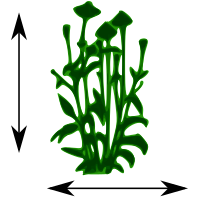
45cm (18in)
View Planting Tips and Care Advice
Echinacea - Growing Guide
Herbaceous Plants - Video Collection
- Dividing Herbaceous Perennials - Video Tip ondemand_video
- Spring Planting Osteospermums - Video Tip ondemand_video
- Dividing Summer Perennials - Video Tip ondemand_video
- Dividing summer flowering Hemerocallis - Video Tip ondemand_video
- Summer propagation - Video Tip ondemand_video
- Self-seeding aquilegia - Video Tip ondemand_video
- Supporting Plants - Video Tip ondemand_video
- Dead heading meconopsis - Video Tip ondemand_video
- Dead heading Delphiniums - Video Tip ondemand_video
- Feeding herbaceous peonies - Video Tip ondemand_video
- Overpotting Problems - Video Tip ondemand_video


