
HYDRANGEA
<

>
HYDRANGEA
Commonly known as Sevenbark
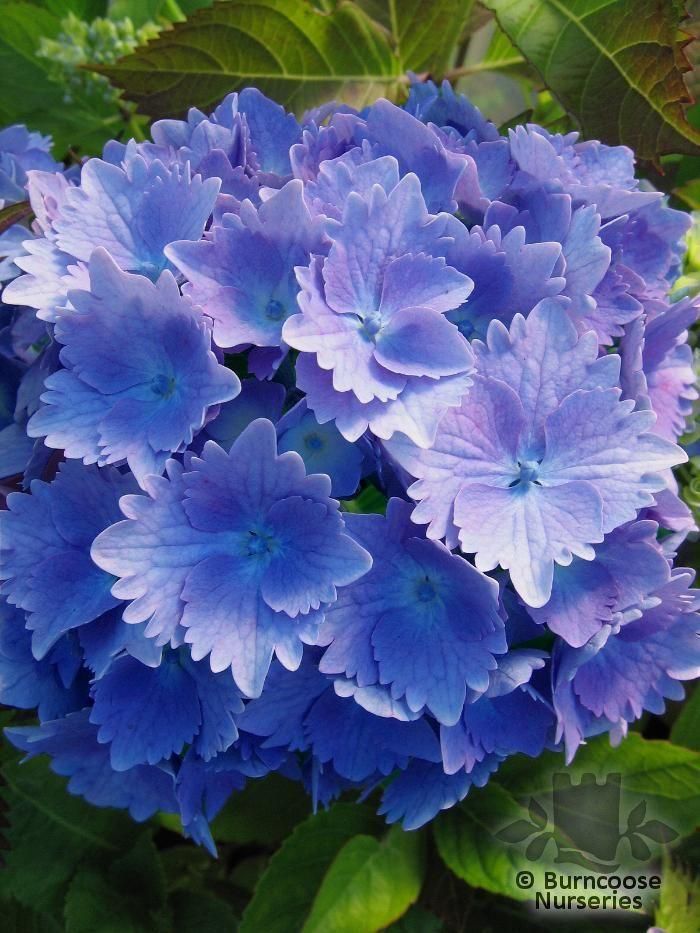
All 2 year old plants. Hydrangeas flower pink or red on an alkaline (lime) soil. They flower blue or purple on an acid (peaty) soil. White varieties remain constant especially in semi-shade. We recommend the use of Hydrangea blueing agent for all blue varieties. Due to the difficulties of growing blue Hydrangeas in pots, the first flush of flowers may flower pink. All Flower JUL-OCT.
Colour-changing mopheads and lacecaps in shades of pink, white and blue from early summer to late autumn and delicate skeletons of flower through the winter.
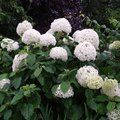
Cones of white from paniculata and bronze and purple foliage from quercifolia.
Genus of 80 or more species of deciduous and evergreen shrubs and climbers. They originate from woodland in eastern Asia and North and South America.
The larger, showier flowers on flat, domed or conical flower heads are sterile, the smaller, fertile flowers are usually found in the centre. The climbers are suitable for a shady wall or fence and mature specimens provide shelter for insects.
Paniculata species attract insects as they have fertile flowers amongst the sterile ones.
Full Plant Details - Sun/Soil & other attributes
-
Floweringlocal_floristJanlocal_floristFeblocal_floristMarlocal_floristAprlocal_floristMaylocal_floristJunlocal_floristJullocal_floristAuglocal_floristSeplocal_floristOctlocal_floristNovlocal_floristDec
-
 Burncoose speciality
See Burncoose Speciality group for more details
Burncoose speciality
See Burncoose Speciality group for more details -
 Pests & Diseases
Red spider mites, scale insects, vine weevils, capsid bugs, grey mould(Botrytis), hydrangea virus, powdery mildew, leaf spot, honey fungus
Pests & Diseases
Red spider mites, scale insects, vine weevils, capsid bugs, grey mould(Botrytis), hydrangea virus, powdery mildew, leaf spot, honey fungus -
Hydrangeas
-
DeciduousLong-stalked, broad leaves to 18cm (7in) long, dark green above, paler beneath
-
BorderSuitable for a shrub border
-
Cottage garden
-
Town garden
-
Fully hardy
-
 Serrate
-
Ovate
-
 Height
1.2m (4ft)
Height
1.2m (4ft) -
Spread
1.2m (4ft)
-
Medium shrubTypically grow to around 4-6 feet in heightRounded shrub. Largee, almost spherical flower heads, 20-25cm (8-10in) across of mainly sterile flowers
-
 Pruning group 1
Suitable for: Deciduous and evergreen trees, and some deciduous shrubs.
Pruning group 1
Suitable for: Deciduous and evergreen trees, and some deciduous shrubs.
Pruning: Minimal pruning required. Prune wayward or crossing branches to maintain a healthy framework.
When: When dormant in the late winter/early spring. Some in the summer/autumn to prevent bleeding of sap.
-
 Hardy - very cold winter
Hardy in all of UK and northern Europe. Plant can possibly withstand temperatures down to -20°C (-4°F)
Hardy - very cold winter
Hardy in all of UK and northern Europe. Plant can possibly withstand temperatures down to -20°C (-4°F) -
Summer Seasonal Interest
-
Fertile moist well-drained soilHumus-rich
-
 Full sun
Shelter from cold, drying winds
Full sun
Shelter from cold, drying winds -
 Partial shade
-
 harmful if eaten
Pets, i.e. cats, dogs, rabbits, rodents, notably cats, dogs
harmful if eaten
Pets, i.e. cats, dogs, rabbits, rodents, notably cats, dogs -
may cause skin allergy
People
-
Rabbit Resistant
-
Mature Size1.2m (4ft)


1.2m (4ft)
View Planting Tips and Care Advice
Hydrangeas - Video Spotlights
- Five varieties of Hydrangea - Video Tip ondemand_video
- Hydrangeas in July - Video Tip ondemand_video
- 7 Varieties of Hydrangea paniculata in August - Video Tip ondemand_video
- Hydrangea 'Lanarth White' - Video Tip ondemand_video
- Hydrangea serrata - Video Tip ondemand_video
- Hydrangea seemanii - Video Tip ondemand_video
- Hydrangea aspera subsp robusta - Video Tip ondemand_video
- June Hydrangea Stock 2022 - Video Tip ondemand_video


