
HEDERA
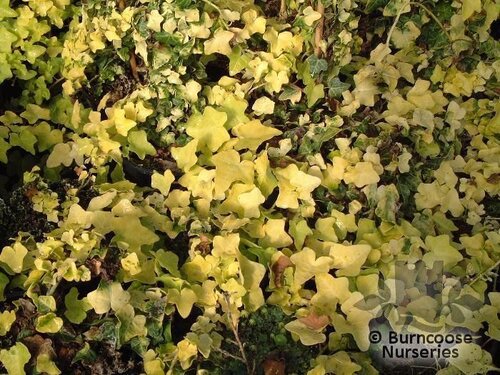


HEDERA
Commonly known as Common ivy, English ivy
An essential climber for any garden. The native H. helix, with holly and fir, is one of the essential winter celebration trio.
The most valuable winter food for birds, the berries forming by November and ripening by Christmas.
Genus of about 22 species of evergreen, woody-stemmed, trailing or self-clinging climbers.
They are found in light woodland or on trees and rocks in N. Africa, the Canary Islands, the Azores and Madeira, and from Europe to the Himalayas, China, Korea and Japan.
They show two distinct stages of growth. In the creeping or climbing juvenile stage they have adventitious rootlets, lobed leaves and hairy shoots. In the adult stage they produce aerial "bushes" with entire leaves and flowers and fruit.
The native H. helix has produced numerous variants and cultivars, many of which are easily grown as houseplants, in hanging baskets or containers.
Full Plant Details - Sun/Soil & other attributes
-
 Good to know
The native ivy, seldom cultivated but with many variants Excellent for the wildlife garden.
Good to know
The native ivy, seldom cultivated but with many variants Excellent for the wildlife garden. -
 Medicinal properties
-
 Pests & Diseases
Red spider mites, scale insects, aphids, leaf spot.
Pests & Diseases
Red spider mites, scale insects, aphids, leaf spot. -
 Place of origin
Europe.
Place of origin
Europe. -
 Height
10m (30ft)
Height
10m (30ft) -
ClimberSome of these climbing plants will need trellis or wire supports if grown on walls or fences. Other grow aerial roots and are self-clingingGlossy, dark-green leaves 4-6cm (1½-2½in) long.
-
Alkaline / Chalk loving
-
Fertile moist well-drained soil
-
 harmful if eaten
(People & Pets)
harmful if eaten
(People & Pets) -
may cause skin allergy
(People & Pets)
