
SALIX
<


>
SALIX
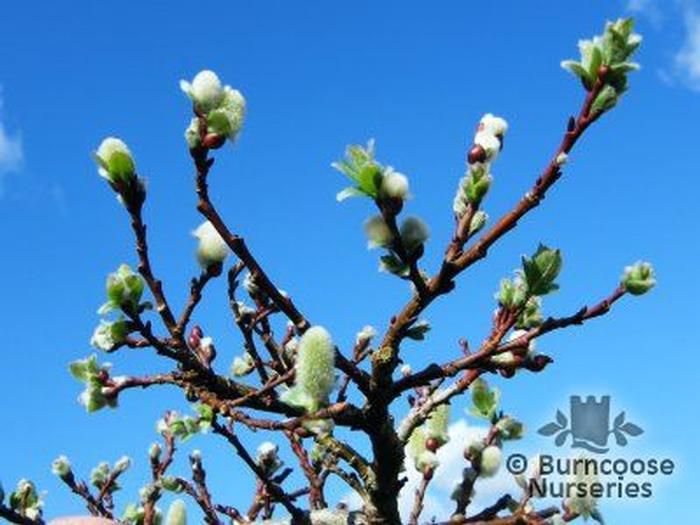
Commonly known as Woolly willow
Very diverse of form and habit from dwarves suitable for troughs to huge weeping trees for planting near water, and some with brilliantly coloured winter shoots.
Embedded in culture for millenia. Coracles, cricket bats, wicker and medicine. Music and literature.
Genus of about 450 species of normally dioecious, deciduous trees and shrubs found in habitats ranging from lowland meadows and riverbanks to sand dunes and mountain screes worldwide, except Australia.
Full Plant Details - Sun/Soil & other attributes
-
 Good to know
Wildlife plant - nectar and pollen for insects.
Good to know
Wildlife plant - nectar and pollen for insects. -
 Pests & Diseases
Aphids, caterpillars, leaf beetles, sawflies, willow scale, anthracnose, honey fungus, rust.
Pests & Diseases
Aphids, caterpillars, leaf beetles, sawflies, willow scale, anthracnose, honey fungus, rust. -
 Place of origin
Northern Europe
Place of origin
Northern Europe -
DeciduousWavy-margined, dark-green leaves to 6cm (2½in) long.
-
 Yellow
ish grey
Yellow
Yellowish grey -
BorderSuitable for a shrub border
-
Rockery (inc alpine)
-
Suitable for small gardens
-
Fully hardy
-
 Orbicular
-
 Height
1m (39in)
Height
1m (39in) -
Spread
1.5m (5ft)
-
Alpine or rock plantThese plants prefer well drained soil and are generally dwarf in habit.
-
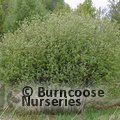
Dwarf shrubTypically only grows to a maximum of one or two feet in height but there will be some exceptions.Compact, rounded, bushy shrub bearing stout shoots, white woolly when young. Produces golden-yellow male catkins to 5cm (2in) long or grey-yellow female catkins to 8cm (3in) long with the leaves.
-
 Pruning group 1
Suitable for: Deciduous and evergreen trees, and some deciduous shrubs.
Pruning group 1
Suitable for: Deciduous and evergreen trees, and some deciduous shrubs.
Pruning: Minimal pruning required. Prune wayward or crossing branches to maintain a healthy framework.
When: When dormant in the late winter/early spring. Some in the summer/autumn to prevent bleeding of sap.
-
 Very hardy
Hardy in the severest continental climates including exposed upland locations in the UK. Plant can withstand temperatures < -20 (-4°F)
Very hardy
Hardy in the severest continental climates including exposed upland locations in the UK. Plant can withstand temperatures < -20 (-4°F) -
Spring Seasonal Interest
-
Fertile moist well-drained soil
-
 Full sun
-
 Bee friendly
-
Mature Size1m (39in)


1.5m (5ft)
View Planting Tips and Care Advice
Salix - Growing Guide


