
HEATHERS Calluna

HEATHERS Calluna
Commonly known as Ling, Scots heather
A patch of heathland for a garden with acidic soil bringing colour and food for bees from July to November. The plant of most moorland in Europe.
Genus of one species of evergreen shrub from lime-free habitats such as moorland, bogs and heathland in northern and western Europe, including Iceland and the Faroe islands. It extends into western Asia (Siberia), northern Morocco and the Azores. It is naturalized in temperate eastern and western North America and is an unwelcome plant in New Zealand and Australia. It is also found in sub-Antarctic islands including Tristan da Cunha.
Hundreds of cultivars exist. Most are valuable bee attracting shrubs but many have been bred with persistently closed buds or "double" flowers which are of no nature value. Heather honey, thicker and difficult to extract, is an important product which is usually sold as comb honey. Other, historical uses for calluna was for beer before hops were used and for besom brooms.
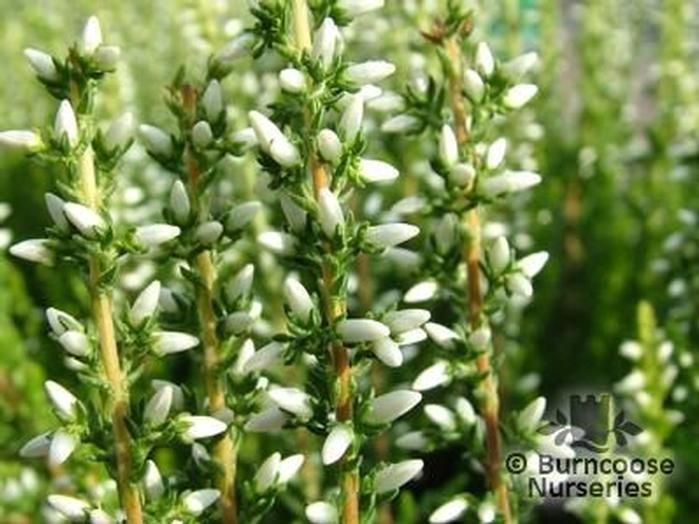
References in literature to heather-clad hills in Scotland refer to C. vulgaris, Common heath. In addition to its common purple colouring it appears naturally in white, the Victorian "lucky white heather".
Full Plant Details - Sun/Soil & other attributes
-
 Good to know
Wildlife plant - bees
Good to know
Wildlife plant - bees -
 Pests & Diseases
Fungal diseases. grey mould. Phytophthora root rot. Rhizoctonia in warm, wet conditions
Pests & Diseases
Fungal diseases. grey mould. Phytophthora root rot. Rhizoctonia in warm, wet conditions -
 Place of origin
Garden origin.
Place of origin
Garden origin. -
Resistant to honey fungusThese plants have little or few problems with honey fungus.
-
Evergreen
-
 Purple
Shades of purple/mauve/lilac/violetLavender purple
Purple
Shades of purple/mauve/lilac/violetLavender purple -
Fully hardy
-
 Height
35cm (14in)
Height
35cm (14in) -
Spread
55cm (22in)
-
Ground coverThese plants are typically low growing and spread quickly to inhibit weed growth on areas of bare soilVigorous, open, erect habit
-
 Pruning group 7
Suitable for: Evergreen shrubs that flower on previous year's growth in Spring, or current year's growth in late Summer/Autumn.
Pruning group 7
Suitable for: Evergreen shrubs that flower on previous year's growth in Spring, or current year's growth in late Summer/Autumn.
Action: Cut back flowered shoots to within 1 inch of previous year's growth.
When: Annually after flowering or in Spring if flowering on current year's growth.
-
 Hardy - cold winter
Hardy in most places throughout the UK even in severe winters. May not withstand open/exposed sites or central/northern locations. Plant can withstand temperatures down to -15°C (5°F)
Hardy - cold winter
Hardy in most places throughout the UK even in severe winters. May not withstand open/exposed sites or central/northern locations. Plant can withstand temperatures down to -15°C (5°F) -
Autumn Seasonal Interest
-
Summer Seasonal Interest
-
Acid / ericaceous loving
-
Fertile well drained soilHumus-rich
-
 Full sun
Open site
Full sun
Open site -
 Bee friendly


