
ENKIANTHUS

<



>
ENKIANTHUS
All flower APR-MAY
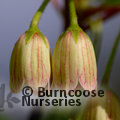
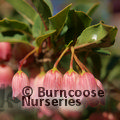
Clusters of cream, through pink to red bells in spring and foliage which colours various shades of red in autumn.
Genus of 12 species of mainly deciduous shrubs from scrub and woodland from the Himalayas to Japan
Full Plant Details - Sun/Soil & other attributes
-
Floweringlocal_floristJanlocal_floristFeblocal_floristMarlocal_floristAprlocal_floristMaylocal_floristJunlocal_floristJullocal_floristAuglocal_floristSeplocal_floristOctlocal_floristNovlocal_floristDec
-
 Good to know
Attractive to bees and other insects.
Good to know
Attractive to bees and other insects. -
 Pests & Diseases
None.
Pests & Diseases
None. -
 Place of origin
Japan.
Place of origin
Japan. -
Resistant to honey fungusThese plants have little or few problems with honey fungus.
-
Deciduoustoothed, mid-green leaves to 5cm (2in) long, clustered at the ends of the shoots.
-
 White
White
-
Bell/Lantern
-
Fully hardy
-
 Serrulate
-
Elliptic
-
Obovate
-
 Height
To 2m (6½ft)
Height
To 2m (6½ft) -
Spread
To 2m (6½ft)
-
Medium shrubTypically grow to around 4-6 feet in heightCompact shrub with red-tinted young branches. Produces flowers in pendent clusters of up to 10.
-
 Pruning group 1
Suitable for: Deciduous and evergreen trees, and some deciduous shrubs.
Pruning group 1
Suitable for: Deciduous and evergreen trees, and some deciduous shrubs.
Pruning: Minimal pruning required. Prune wayward or crossing branches to maintain a healthy framework.
When: When dormant in the late winter/early spring. Some in the summer/autumn to prevent bleeding of sap.
-
 Hardy - cold winter
Hardy in most places throughout the UK even in severe winters. May not withstand open/exposed sites or central/northern locations. Plant can withstand temperatures down to -15°C (5°F)
Hardy - cold winter
Hardy in most places throughout the UK even in severe winters. May not withstand open/exposed sites or central/northern locations. Plant can withstand temperatures down to -15°C (5°F) -
Autumn Seasonal Interest
-
Spring Seasonal Interest
-
Summer Seasonal Interest
-
Fertile moist well-drained soilHumus-rich.
-
Neutral to acid soil
-
 Full sun
-
 Partial shade
-
Mature Sizeto 2m (6½ft)


to 2m (6½ft)
View Planting Tips and Care Advice
Enkianthus - Care Guide


