
LAVANDULA
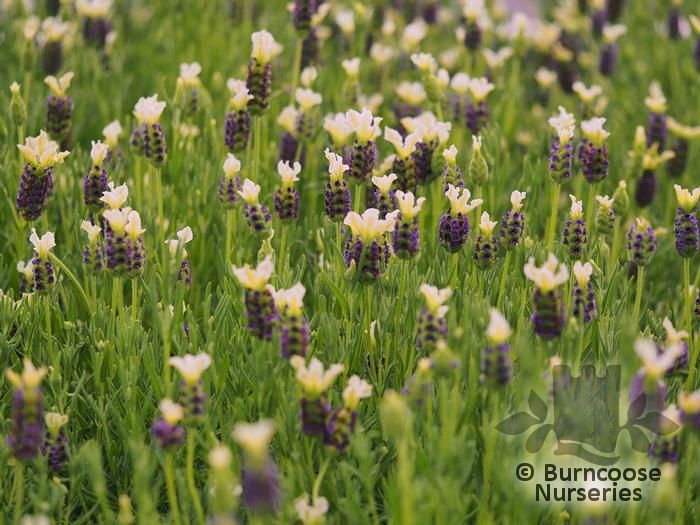


LAVANDULA
Commonly known as Common lavender
Timeless favourites which bring to mind the perfect cottage garden, butterflies and bees, and summery clumps of purple lavender.
"English lavender" is generally used to describe L. angustifolia, the hardiest species. The name is shared with the hybrid L. angustifolia x L. latifolia (spike lavender).
L. stoechas (French lavender), pedunculata cultivars and other hybrids are less hardy and can suffer in hard winters.
Genus of about 23 species of aromatic, evergreen shrubs and subshrubs from dry, sunny, exposed rocky habitats from the Canary Islands, the Mediterranean (English lavender) and northeastern Africa to southwestern Asia and India.
Leaves and flower heads, when harvested before fully open, are dried and used in pot-pourri.
Many species have a very high nectar content making them particularly attractive to bees.
All are suitable for containers where the environment can be controlled to suit less hardy varieties.
Full Plant Details - Sun/Soil & other attributes
-
Floweringlocal_floristJanlocal_floristFeblocal_floristMarlocal_floristAprlocal_floristMaylocal_floristJunlocal_floristJullocal_floristAuglocal_floristSeplocal_floristOctlocal_floristNovlocal_floristDec
-
 Good to know
Wildlife plant - insects
Good to know
Wildlife plant - insects -
 Pests & Diseases
Froghoppers, grey mould
Pests & Diseases
Froghoppers, grey mould -
 Place of origin
Garden origin. Bred at Twickel Castle, Netherlands.
Place of origin
Garden origin. Bred at Twickel Castle, Netherlands. -
Resistant to honey fungusThese plants have little or few problems with honey fungus.
-
EvergreenNarrowly oblong leaves to 5cm (2in).
-
 Purple
Shades of purple/mauve/lilac/violet
Purple
Shades of purple/mauve/lilac/violet -
SpikesDense spikes to 8cm (3in) long
-
Tubular
-
Coastal / windsweptSlightly back from the sea with more shelter
-
Patio / pot plants
-
Fully hardy
-
 Height
60cm (24in)
Height
60cm (24in) -
Spread
1m (39in)
-
Dwarf shrubTypically only grows to a maximum of one or two feet in height but there will be some exceptions.Compact, bushy shrub
-
 Pruning group 7
Suitable for: Evergreen shrubs that flower on previous year's growth in Spring, or current year's growth in late Summer/Autumn.
Pruning group 7
Suitable for: Evergreen shrubs that flower on previous year's growth in Spring, or current year's growth in late Summer/Autumn.
Action: Cut back flowered shoots to within 1 inch of previous year's growth.
When: Annually after flowering or in Spring if flowering on current year's growth.
-
 Hardy - cold winter
Hardy in most places throughout the UK even in severe winters. May not withstand open/exposed sites or central/northern locations. Plant can withstand temperatures down to -15°C (5°F)
Hardy - cold winter
Hardy in most places throughout the UK even in severe winters. May not withstand open/exposed sites or central/northern locations. Plant can withstand temperatures down to -15°C (5°F) -
Scented flowers
-
Scented foliage
-
Summer Seasonal Interest
-
Medium to light, fertile, well drained soil
-
 Full sun
-
 Bee friendly
-
Butterfly friendly
-
Mature Size60cm (24in)


1m (39in)
View Planting Tips and Care Advice
View Customers Also Bought


View Planting Combinations

