
SYRINGA
<



>
SYRINGA
Commonly known as Lilac
All Flower MAY-JUN
The epitome of the English garden, not just in old vicarages, in thousands of old cottage gardens in May the lilac is in bloom.
Genus of about 20 species of deciduous trees and shrubs from woodland and scrub from southeastern Europe to eastern Asia. Tubular flowers are attractive to long-tongued insects.
Full Plant Details - Sun/Soil & other attributes
-
Floweringlocal_floristJanlocal_floristFeblocal_floristMarlocal_floristAprlocal_floristMaylocal_floristJunlocal_floristJullocal_floristAuglocal_floristSeplocal_floristOctlocal_floristNovlocal_floristDec
-
 Good to know
Deadhead newly planted lilacs before fruit forms. Will tolerate hard renovation pruning
Good to know
Deadhead newly planted lilacs before fruit forms. Will tolerate hard renovation pruning -
 Pests & Diseases
Leaf miners, thrips, willow scale, lilac blight, honey fungus
Pests & Diseases
Leaf miners, thrips, willow scale, lilac blight, honey fungus -
 Place of origin
Eastern Europe
Place of origin
Eastern Europe -
DeciduousHeart-shaped to oval leaves to 10cm (4in) long
-
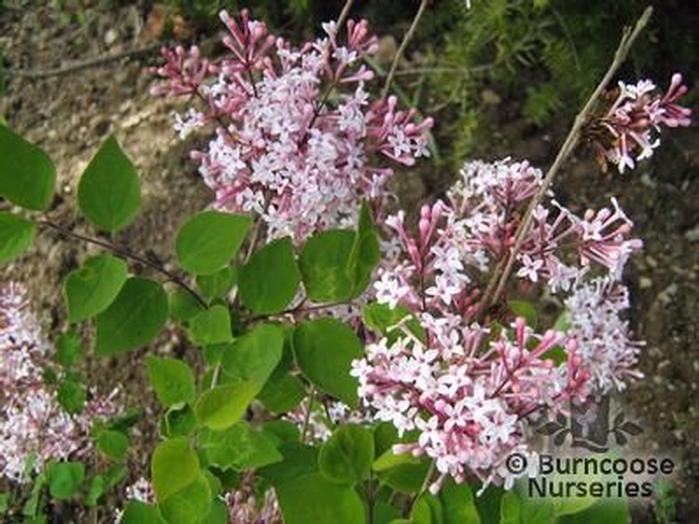
 Shades of pink
All shades of pink through to Carmine (red)Pale pink
Shades of pink
All shades of pink through to Carmine (red)Pale pink -
DoubleMulti rows of petals, no stamen showing
-
PaniclesSlender panicles
-
BorderSuitable for a shrub border
-
Coastal / windsweptSlightly back from the sea with more shelter
-
Cottage garden
-
Town garden
-
Fully hardy
-
 Entire
-
Ovate
-
 Height
5m (16ft)
Height
5m (16ft) -
Spread
5m (16ft)
-
Tall Shrub
-
 Pruning group 1
Suitable for: Deciduous and evergreen trees, and some deciduous shrubs.
Pruning group 1
Suitable for: Deciduous and evergreen trees, and some deciduous shrubs.
Pruning: Minimal pruning required. Prune wayward or crossing branches to maintain a healthy framework.
When: When dormant in the late winter/early spring. Some in the summer/autumn to prevent bleeding of sap.
-
 Hardy - very cold winter
Hardy in all of UK and northern Europe. Plant can possibly withstand temperatures down to -20°C (-4°F)
Hardy - very cold winter
Hardy in all of UK and northern Europe. Plant can possibly withstand temperatures down to -20°C (-4°F) -
Scented flowers
-
Spring Seasonal Interest
-
Summer Seasonal Interest
-
Fertile well drained soil
-
Neutral to alkaline soil
-
 Full sun
-
 Bee friendly
-
Rabbit Resistant
-
Mature Size5m (16ft)


5m (16ft)
View Planting Tips and Care Advice
Syringa - Growing Guide


