
OLEA europaea
<


>
OLEA europaea
Commonly known as Common olive
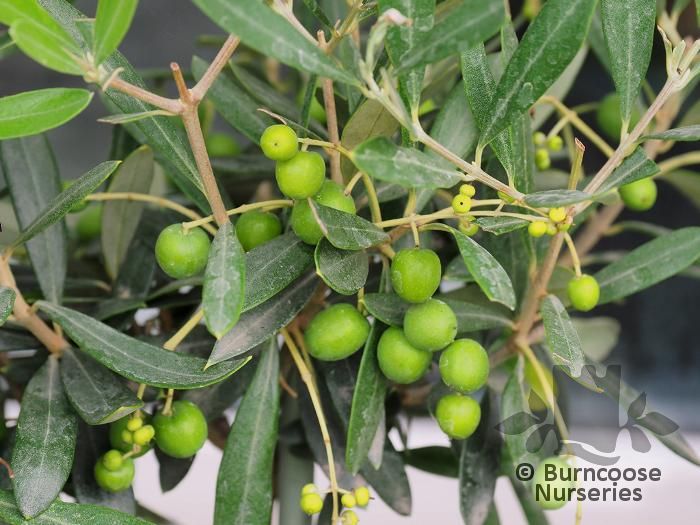
Small white flowers and leathery green leaves, silver beneath


£25.00 each
Large
£75.00
Full Plant Details - Sun/Soil & other attributes
-
Floweringlocal_floristJanlocal_floristFeblocal_floristMarlocal_floristAprlocal_floristMaylocal_floristJunlocal_floristJullocal_floristAuglocal_floristSeplocal_floristOctlocal_floristNovlocal_floristDec
-
 Good to know
Fruit is unlikely to ripen in UK climate
Good to know
Fruit is unlikely to ripen in UK climate -
 Pests & Diseases
Scale insects under glass
Pests & Diseases
Scale insects under glass -
 Place of origin
Mediterranean
Place of origin
Mediterranean -
EvergreenOpposite, irregularly toothed leaves to 8cm (3in) long
-
 Cream
Cream
-
PaniclesAxillary panicles to 5cm (2in) long
-
Greenhouse / conservatoryNot the sort of plants to be grown outside where there are likely to be frosts. These plants need to be grown in a conservatory or cool greenhouse or at least brought inside for the winterUnder glass grow in loam-based compost JI No.3 with additional sharp sand in full light. Restrictive pruning in spring when required
-
Sub-tropical / mediterranean
-
Frost hardy (down to -5)
-
 Dentate
-
Elliptic
-
Lanceolate
-
 Height
8m (26ft)
Height
8m (26ft) -
Spread
8m (26ft)
-
TreeSlow growing tree developing a rounded head. The tiny flowers are followed by spherical to ovoid green fruit to 4cm (1½in) long which ripens to black
-
 Pruning group 1
Suitable for: Deciduous and evergreen trees, and some deciduous shrubs.
Pruning group 1
Suitable for: Deciduous and evergreen trees, and some deciduous shrubs.
Pruning: Minimal pruning required. Prune wayward or crossing branches to maintain a healthy framework.
When: When dormant in the late winter/early spring. Some in the summer/autumn to prevent bleeding of sap.
-
 Half hardy - unheated greenhouse / mild winter
Hardy in coastal and relatively mild parts of the UK except in severe winters and a risk from sudden (early) frosts. May be hardy elsewhere with wall shelter or good micro-climate. Likely to be damaged or killed in cold winters. Plant can withstand temperatures down to -5°C (23°F)
Half hardy - unheated greenhouse / mild winter
Hardy in coastal and relatively mild parts of the UK except in severe winters and a risk from sudden (early) frosts. May be hardy elsewhere with wall shelter or good micro-climate. Likely to be damaged or killed in cold winters. Plant can withstand temperatures down to -5°C (23°F) -
Fertile well drained soilDeep, sharply drained soil
-
 Full sun
View Detailed Plant Description
View Planting Tips and Care Advice
Olea - Growing Guide


