
OLEARIA paniculata
<

>
OLEARIA paniculata
Commonly known as Daisy bush
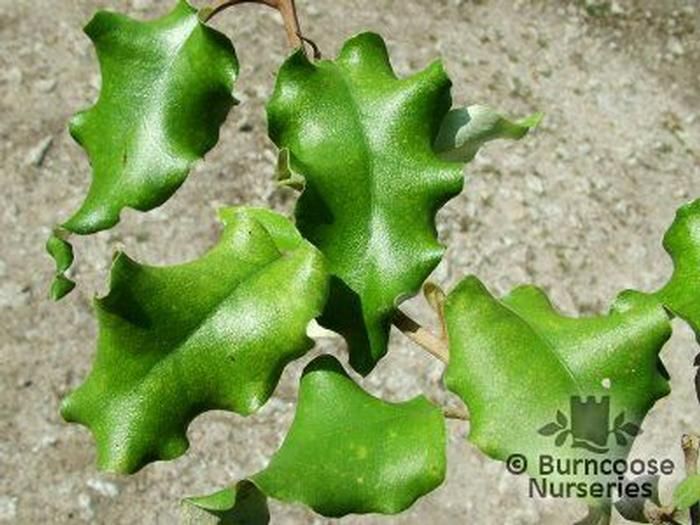
(syn. forsteri) - handsome leathery light-green pittosporum-like foliage, very wind tolerant


individually £13.50 each , 3+ £12.00 each
Full Plant Details - Sun/Soil & other attributes
-
Floweringlocal_floristJanlocal_floristFeblocal_floristMarlocal_floristAprlocal_floristMaylocal_floristJunlocal_floristJullocal_floristAuglocal_floristSeplocal_floristOctlocal_floristNovlocal_floristDec
-
 Pests & Diseases
Trouble free
Pests & Diseases
Trouble free -
 Place of origin
New Zealand
Place of origin
New Zealand -
Resistant to honey fungusThese plants have little or few problems with honey fungus.
-
EvergreenElliptic to ovate-oblong, wavy-edged, leathery, olive-green leaves to 10cm (4in) long, shiny above and white to light-brown-felted beneath
-
 White
Dull white
White
Dull white -
Panicles
-
Australian / New Zealand
-
BorderSuitable for a shrub border
-
Coastal / windswept
-
Fully hardyBorderline
-
 Entire
-
Elliptic
-
Ovate
-
 Height
6m (20ft)
Height
6m (20ft) -
Spread
2m (6½ft)
-
Tall ShrubOr small tree. Produces small flowers to 6mm (¼in) across in autumn
-
 Hardy - average winter
Hardy through most of the UK apart from inland valleys, at altitude and central/northerly locations. May suffer foliage damage and stem dieback in harsh winters in cold gardens. Plant can withstand temperatures down to -10°C (14°F)Borderline
Hardy - average winter
Hardy through most of the UK apart from inland valleys, at altitude and central/northerly locations. May suffer foliage damage and stem dieback in harsh winters in cold gardens. Plant can withstand temperatures down to -10°C (14°F)Borderline -
Scented flowers
-
Autumn Seasonal Interest
-
Fertile well drained soil
-
 Full sun
Shelter from cold, dry winds
Full sun
Shelter from cold, dry winds -
Mature Size6m (20ft)


2m (6½ft)
View Detailed Plant Description
View Planting Tips and Care Advice
Olearia - Care Guide
- Caring for Olearia - Introduction
- Fully hardy Olearias suitable as hedging plants or windbreaks especially in coastal areas
- Hardy taller growing Olearia species as specimen or freestanding plants in a shrub border or woodland context
- Smaller growing ornamental species of Olearia which are better grown in the greenhouse in colder parts of the country
- Summer Pruning Olearia scilloniensis - Video Tip ondemand_video
- Summer propagation - Video Tip ondemand_video


