
CERCIS
<



>
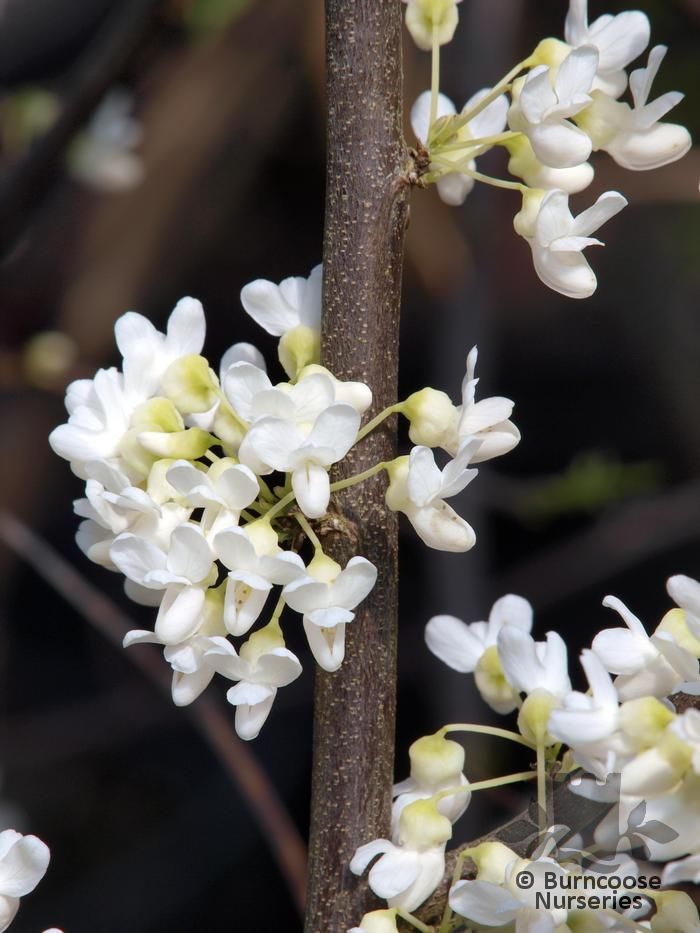
CERCIS
Commonly known as American Judas tree, Eastern redbud
Genus of about 10 species of deciduous shrubs and trees from woodlands, woodland margins and rocky hillsides in the Mediterranean, central and eastern Asia and North America.
The most common is C. siliquastrum, Judas tree - or more likely Judea's tree (where it is commonplace). An absolute eyecatcher when flowers appear from an old trunk.
Full Plant Details - Sun/Soil & other attributes
-
 Good to know
Pea-like flowers are produced on last year's and previous years' wood
Good to know
Pea-like flowers are produced on last year's and previous years' wood -
 Pests & Diseases
Leaf hoppers, scale insects, canker, coral spot, Verticillium wilt.
Pests & Diseases
Leaf hoppers, scale insects, canker, coral spot, Verticillium wilt. -
 Place of origin
North America
Place of origin
North America -
DeciduousHeart-shaped leaves, pointed at the tips, to 10cm (4in) long, bronze when young, turning yellow in autumn.
-
 Shades of pink
All shades of pink through to Carmine (red)Pale rose
Shades of pink
All shades of pink through to Carmine (red)Pale rose -
Fully hardy
-
 Entire
-
 Height
10m (33ft)
Height
10m (33ft) -
Spread
10m (33ft)
-
Tall ShrubOr small tree. Spreading, often multi-stemmed. Clusters of 2-8 small flowers to 1cm (½in) long on bare stems.
-
 Pruning group 1
Suitable for: Deciduous and evergreen trees, and some deciduous shrubs.
Pruning group 1
Suitable for: Deciduous and evergreen trees, and some deciduous shrubs.
Pruning: Minimal pruning required. Prune wayward or crossing branches to maintain a healthy framework.
When: When dormant in the late winter/early spring. Some in the summer/autumn to prevent bleeding of sap.
-
 Hardy - cold winter
Hardy in most places throughout the UK even in severe winters. May not withstand open/exposed sites or central/northern locations. Plant can withstand temperatures down to -15°C (5°F)
Hardy - cold winter
Hardy in most places throughout the UK even in severe winters. May not withstand open/exposed sites or central/northern locations. Plant can withstand temperatures down to -15°C (5°F) -
Autumn Seasonal Interest
-
Spring Seasonal Interest
-
Fertile moist well-drained soilLoamy. Does not like to be transplanted.
-
 Full sun
-
 Partial shade
Dappled shade.
Partial shade
Dappled shade. -
Rounded to broadly spreading
-
 Bee friendly
-
Mature Size10m (33ft)


10m (33ft)
View Planting Tips and Care Advice
Cercis - Growing Guide


