
VIBURNUM tinus 'Eve Price'
<


>
VIBURNUM tinus 'Eve Price'
Commonly known as Laurustinus

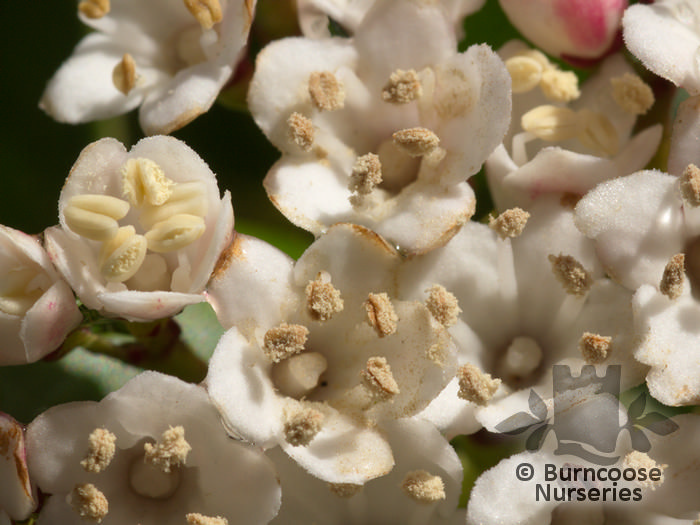
Buds carmine opening white, compact habit


individually £14.50 each , 3+ £13.00 each
Large
£50.00 each
Full Plant Details - Sun/Soil & other attributes
-
Floweringlocal_floristJanlocal_floristFeblocal_floristMarlocal_floristAprlocal_floristMaylocal_floristJunlocal_floristJullocal_floristAuglocal_floristSeplocal_floristOctlocal_floristNovlocal_floristDec
-
BerriesThese plants have berries.
-
 Good to know
Wildlife plant - birds and insects. Flowers over a long period in winter
Good to know
Wildlife plant - birds and insects. Flowers over a long period in winter -
 Pests & Diseases
Aphids, viburnum beetle, honey fungus, leaf spot.
Pests & Diseases
Aphids, viburnum beetle, honey fungus, leaf spot. -
 Place of origin
Garden origin.
Place of origin
Garden origin. -
EvergreenOblong, dark-green leaves to 8cm (3in) long
-
 White
White
-
BorderSuitable for a large shrub border
-
Coastal / windsweptWithstands exposed conditions
-
Cottage garden
-
Town garden
-
Fully hardyBorderline
-
 Entire
-
Oblong
-
 Height
3m (10ft)
Height
3m (10ft) -
Spread
3m (10ft)
-
HedgeIdeal for hedging
-
Tall ShrubCompact, dense shrub. Produces small flowers 6mm (¼in) across in flattened, terminal cymes 10cm (4in) across over a long period in winter and early spring, followed by blue-black fruit 6mm (¼in) long.
-
 Pruning group 1
Suitable for: Deciduous and evergreen trees, and some deciduous shrubs.
Pruning group 1
Suitable for: Deciduous and evergreen trees, and some deciduous shrubs.
Pruning: Minimal pruning required. Prune wayward or crossing branches to maintain a healthy framework.
When: When dormant in the late winter/early spring. Some in the summer/autumn to prevent bleeding of sap.
-
 Hardy - average winter
Hardy through most of the UK apart from inland valleys, at altitude and central/northerly locations. May suffer foliage damage and stem dieback in harsh winters in cold gardens. Plant can withstand temperatures down to -10°C (14°F)
Hardy - average winter
Hardy through most of the UK apart from inland valleys, at altitude and central/northerly locations. May suffer foliage damage and stem dieback in harsh winters in cold gardens. Plant can withstand temperatures down to -10°C (14°F) -
Spring Seasonal Interest
-
Winter Seasonal Interest
-
Fertile moist well-drained soilModerately fertile
-
 Full sun
-
 Partial shade
-
 Bee friendly
-
 Bird friendly
-
Rabbit Resistant
-
Mature Size3m (10ft)


3m (10ft)
View Detailed Plant Description
View Planting Tips and Care Advice
Viburnum - Growing Guide


