
VIBURNUM
<
>
VIBURNUM
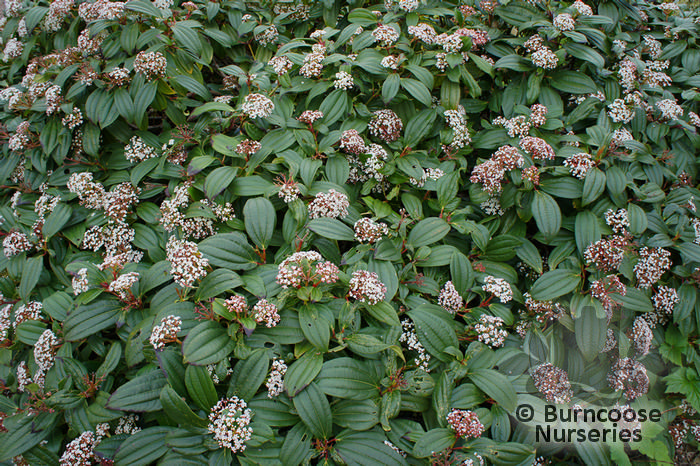
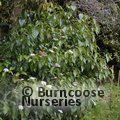
Commonly known as Tubeflower viburnum
Versatile and generally easy shrubs with plenty to appreciate. Form, foliage, clusters of flowers (some heavily scented), for insects and berries for birds.
Genus of 200 or more species of evergreen, semi-evergreen and deciduous shrubs mainly from northern temperate regions but also southeastern Asia and South America.
UK natives are the wayfaring tree, V. lantana, named as it was often planted along trackways, and the guelder rose ( relates to the Dutch province of Gelderland), V. opulus.
Full Plant Details - Sun/Soil & other attributes
-
BerriesThese plants have berries.
-
 Good to know
Tolerates hard pruning
Good to know
Tolerates hard pruning -
 Pests & Diseases
Aphids, viburnum beetles, honey fungus, leaf spot
Pests & Diseases
Aphids, viburnum beetles, honey fungus, leaf spot -
 Place of origin
Southeastern Asia, Himalayas, northern Burma, China
Place of origin
Southeastern Asia, Himalayas, northern Burma, China -
EvergreenVariable, often drooping, ovate, oval or oblong, pointed, usually entire, waxy, dull, dark green leaves
-
 White
White
-
Tubular
-
BorderSuitable for a large shrub border
-
Coastal / windsweptSlightly back from the sea with more shelter
-
Cottage garden
-
Town garden
-
Woodland garden
-
Fully hardy
-
 Entire
-
Ovate
-
 Height
3m (10ft)
Height
3m (10ft) -
Spread
3m (10ft)
-
Tall ShrubLarge shrub. Produces flowers in broad, flat corymbs 8-15cm (3-6in) across followed by clusters of ovoid fruit, 6mm (¼in) long, red at first, turning black
-
 Pruning group 1
Suitable for: Deciduous and evergreen trees, and some deciduous shrubs.
Pruning group 1
Suitable for: Deciduous and evergreen trees, and some deciduous shrubs.
Pruning: Minimal pruning required. Prune wayward or crossing branches to maintain a healthy framework.
When: When dormant in the late winter/early spring. Some in the summer/autumn to prevent bleeding of sap.
-
 Hardy - cold winter
Hardy in most places throughout the UK even in severe winters. May not withstand open/exposed sites or central/northern locations. Plant can withstand temperatures down to -15°C (5°F)
Hardy - cold winter
Hardy in most places throughout the UK even in severe winters. May not withstand open/exposed sites or central/northern locations. Plant can withstand temperatures down to -15°C (5°F) -
Summer Seasonal Interest
-
Fertile moist well-drained soilModerately fertile
-
 Full sun
-
 Partial shade
-
Mature Size3m (10ft)


3m (10ft)
View Planting Tips and Care Advice
Viburnum - Growing Guide


