
ACER pectinatum var. forrestii
<


>
ACER pectinatum var. forrestii
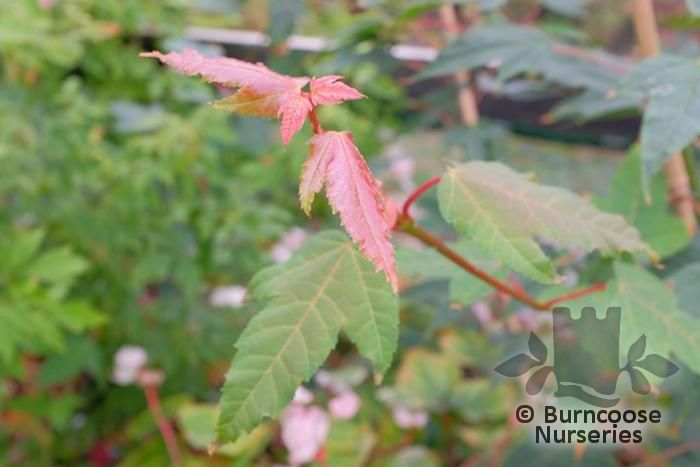
Striped bark and red petioles. Good autumn colour.


£30.00
Full Plant Details - Sun/Soil & other attributes
-
Floweringlocal_floristJanlocal_floristFeblocal_floristMarlocal_floristAprlocal_floristMaylocal_floristJunlocal_floristJullocal_floristAuglocal_floristSeplocal_floristOctlocal_floristNovlocal_floristDec
-
Ornamental bark
-
 Pests & Diseases
Aphids, mites, scale insects, caterpillars, tar spot, Verticillium wilt, leaf scorch, honey fungus
Pests & Diseases
Aphids, mites, scale insects, caterpillars, tar spot, Verticillium wilt, leaf scorch, honey fungus -
 Place of origin
Western China
Place of origin
Western China -
DeciduousBroadly ovate leaves to 12cm (4¾in) long, 3- or 5-lobed, opening red-tinged green, turning dark green in summer and orange-red in autumn
-
Woodland garden
-
Fully hardy
-
 Lobed
Lobed
-
Ovate
-
 Height
10m (33ft)
Height
10m (33ft) -
Spread
10m (33ft)
-
TreeSpreading tree with arching branches, red when young becoming green-and-white-striped. Produces pendent racemes of red-flushed green flowers followed by red- or brown-flushed light green fruit
-
 Pruning group 1
Suitable for: Deciduous and evergreen trees, and some deciduous shrubs.
Pruning group 1
Suitable for: Deciduous and evergreen trees, and some deciduous shrubs.
Pruning: Minimal pruning required. Prune wayward or crossing branches to maintain a healthy framework.
When: When dormant in the late winter/early spring. Some in the summer/autumn to prevent bleeding of sap.
-
 Hardy - very cold winter
Hardy in all of UK and northern Europe. Plant can possibly withstand temperatures down to -20°C (-4°F)
Hardy - very cold winter
Hardy in all of UK and northern Europe. Plant can possibly withstand temperatures down to -20°C (-4°F) -
Autumn Seasonal Interest
-
Spring Seasonal Interest
-
Fertile moist well-drained soil
-
 Full sun
-
 Partial shade
-
Rounded to broadly spreading
-
Mature Size10m (33ft)


10m (33ft)
View Detailed Plant Description
View Planting Tips and Care Advice
Acers - Care Guide


